Close
Leave Feedback
Welcome to the new btim.com.auTake a two minute tour to see what we've changed
Hi there! Welcome to the new look Pendal website... Take a two minute tour to see what we’ve changed.
Mainstream Online Web Portal
LoginInvestors can view their accounts online via a secure web portal. After registering, you can access your account balances, periodical statements, tax statements, transaction histories and distribution statements / details.
Advisers will also have access to view their clients’ accounts online via the secure web portal.

The Point
Quick, actionable insights for investors


May 29
The headlines driving Aussie equities | Falling USD should lift EMs | Where to find opportunities in theme-driven markets
Loading posts...
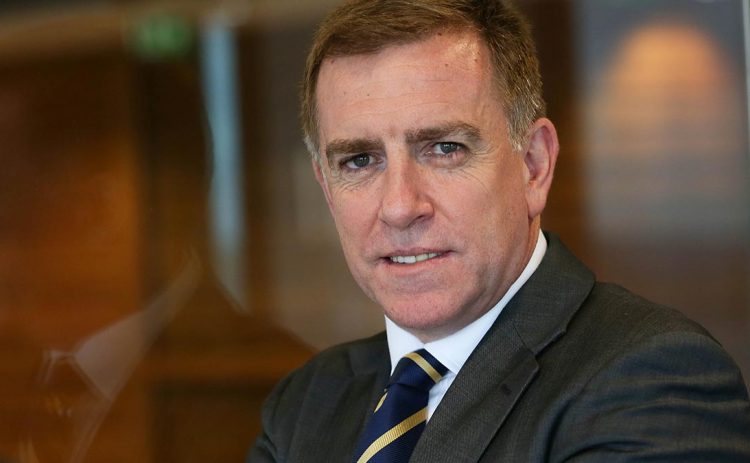
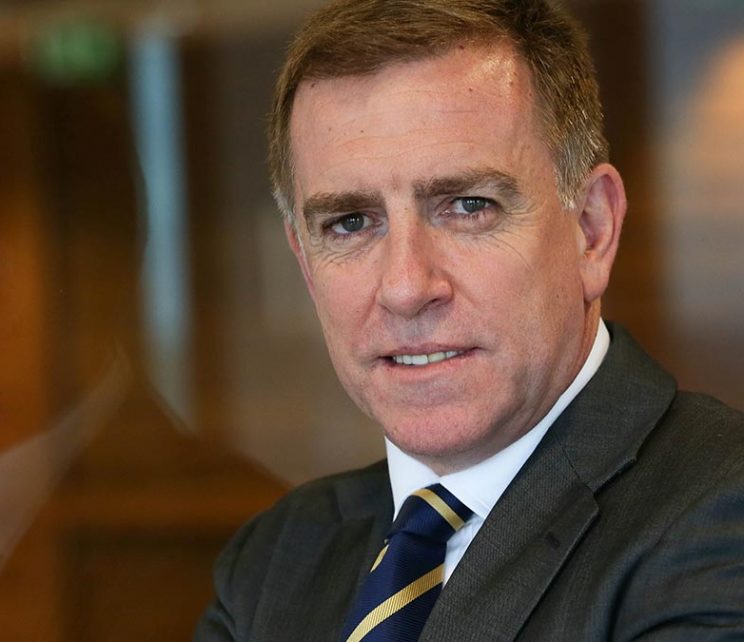

Elise McKay: The headlines driving Aussie equities this week
Quick view
Elise McKay: The headlines driving Aussie equities this week
Here are the main factors driving the ASX this week, according to Aussie equities analyst and portfolio manager ELISE MCKAY and reported by head investment specialist CHRIS ADAMS
Read Pendal’s latest weekly equities overview.

Crispin Murray: Where to find ASX opportunities amid ‘theme-driven’ market noise
Quick view
Crispin Murray: Where to find ASX opportunities amid ‘theme-driven’ market noise
Share prices are increasingly moved by popular themes like AI disruption, trade wars, and tariff fears – without regard to company fundamentals or long-term valuations.
As a result, quality Australian companies with sound outlooks and predictable cash flows are being indiscriminately sold off.
That’s creating opportunities for active fund managers, Pendal’s head of equities Crispin Murray told Morningstar’s 2025 investment conference in Sydney last week.
“We believe this is creating more distortions in the market. It means the amplitude of mispricing is greater, and it lasts longer.”
Global market dislocation means the ASX has a range of industrial companies with predictable cash flows and returns that have been sold down and offer opportunities for investors, he says.
“One example is CSL – one of Australia’s largest, most successful companies. Five years ago it was running high – at an over-40 multiple. It’s now down to about 22 times earnings,” he says.
Fears of the impact of tariffs on CSL are misplaced, assuming the company doesn’t do anything to respond – “and I think that’s where the market’s overreacting,” argues Crispin.
“We think the risk on the tariff front is being overstated, and that’s what’s providing you the opportunity.” Pendal owns CSL.
Read more

‘Emerging markets crisis’? That’s a wildly overstated view, say our experts
Quick view
‘Emerging markets crisis’? That’s a wildly overstated view, say our experts
Some analysts have described a pattern of a weaker dollar and rising bond yields in the US as a ‘classic emerging markets crisis’.
“As veterans of actual emerging crises dating back to 1994, we consider that view to be wildly overstated,” writes Pendal’s EM team in their latest analysis.
In spite of volatility and weakness in core US financial markets, the currencies of almost all emerging markets strengthened against the US dollar in March and April. Meanwhile bond yields fell for the majority of major EMs.
“Emerging markets are driven by two major global drivers: international capital flows and international trade.
“A weaker dollar represents capital flowing out of the US and into the rest of the world – and a weaker dollar has consistently been positive for emerging markets over the past 30 years.
“Although evolving tariff policies threaten a downturn in global trade, the message from financial markets is that investor uncertainty about US economic policies is a clear positive for emerging economies and for investors in emerging markets.”
Read more

Amy Xie Patrick: China, the US, and the value of uncertainty
Quick view
Amy Xie Patrick: China, the US, and the value of uncertainty
This month’s divergence in US and China rates policies wasn’t just a curiosity for money managers, observes Pendal’s head of income strategies, Amy Xie Patrick.
“It’s a study in contrasts, a reflection of deeper structural differences, and a reminder that policy effectiveness doesn’t always come wrapped in transparency or even democracy,” says Amy in her latest markets analysis.
On May 7, the US Fed left rates unchanged despite growing political pressure. Meanwhile, the People’s Bank of China delivered another dose of stimulus.
“One central bank faced market criticism over its non-committal guidance,” notes Amy. “The other moved swiftly and silently, without needing to justify its decision.
“Perhaps the most contrarian yet valuable takeaway is that less policy guidance may be a good thing.
“By avoiding the hard task of forecasting far into the future, we free ourselves from unhelpful narratives may that turn out to be false.
“By focusing on getting it right rather than always being right, we’re able to preserve the flexibility to change course when the fundamentals change.”
Read Amy’s full article here
Latest updates from our fund managers

Income and Fixed Interest
Tim Hext: Australia to expect state budget downgrades
June 25, 2025
See all
Emerging Markets
Emerging markets: Look past commodity exports to countries with strong domestic demand
July 26, 2023
See allSubscribe to The Point
Get regular insights on investing, market analysis and portfolio management from the experts at Perpetual Group.
Follow
The Point



These podcasts are for general information purposes only, should not be considered as a comprehensive statement on any matter and should not be relied upon as such. They have been prepared without taking into account any recipient’s personal objectives, financial situation or needs. Because of this, recipients should, before acting on the information, consider its appropriateness having regard to their or their clients’ individual objectives, financial situation and needs. The information is not to be regarded as a securities recommendation.
The information in these podcasts may contain material provided by third parties, is given in good faith and has been derived from sources believed to be accurate as at its issue date. While such material is published with necessary permission, and while all reasonable care has been taken to ensure that the information in this presentation is complete and correct, to the maximum extent permitted by law neither Pendal nor any company in the Pendal group accepts any responsibility or liability for the accuracy or completeness of this information.
Any projections contained in these podcasts are predictive and should not be relied upon when making an investment decision or recommendation. Whilst we have used every effort to ensure that the assumptions on which the projections are based are reasonable, the projections may be based on incorrect assumptions or may not take into account known or unknown risks and uncertainties. The actual results may differ materially from these projections.
Performance figures are calculated in accordance with the Financial Services Council (FSC) standards. Performance data (post-fee) assumes reinvestment of distributions and is calculated using exit prices, net of management costs. Performance data (pre-fee) is calculated by adding back management costs to the post-fee performance. Past performance is not a reliable indicator of future performance.
For more information, please call Customer Relations on 1300 346 821 8.00am to 6:00pm (Sydney time) or visit our website www.pendalgroup.com

FAST PODCAST: The investment outlook for Aussie REITs
Australian Real Estate Investment Trusts could be reasonable value at the moment, “factoring in where we think interest rates will go”, says Pendal portfolio manager Julia Forrest in our latest fast podcast.
“We’re not expecting any severe stress in the sector, unlike in the GFC.
“The sector is reasonably well positioned. It’s offering a reasonable dividend yield – 5% to 6% for the yield for the stocks that we like.
“There is still some earnings growth coming through for some of the larger mall landlords.
“Given what we’ve seen happen in the last two years – and the concessions that they’ve made to tenants for rents during Covid – we will see some rents coming back.
“It will to some extent be moderated by rising cash rates and what that does to debt cost going forward.
“But the sector is reasonably well positioned.
“I think management still have the GFC in their corporate memories and have positioned their portfolios accordingly.”

Global equities: Time to consider good quality, long-duration assets
Quick view
Global equities: Time to consider good quality, long-duration assets
Nudgem Richyal isn’t calling the bottom of the market. Some sectors haven’t sold down, and remain at risk.
But it might be time to put some duration back into portfolios – stocks with long-term growth prospects, says the co-manager of Pendal Global Select Fund.
“The valuations of some duration assets have become much more attractive. “Health care is one area we like. It is a long-term play, and usually when inflation peaks, the baton is passed from energy stocks to healthcare stocks.
“Healthcare is a quality, long-duration asset, as opposed to speculative tech.”
Nudgem compares the recent volatility to an overflowing water tower.
“The Fed has put a lot of liquidity into the system since 2008, and that’s the equivalent of filling up the water tower,” Richyal explains.
“But then there was too much liquidity in the system, or water in the tower, and the frothy stuff at the top flowed over.
“Recently we’ve seen a mopping up of the overflow. As the excess liquidity or flow of water stops, levels start to even up and that’s what’s happening now,” he says.

Global equities: The sectors to think about now
Quick view
Global equities: The sectors to think about now
Which sectors should global equities investors be considering right now?
Chris Lees, co-manager of Pendal Global Select Fund, points investors towards industries such as healthcare and semi-conductors.
“According to our process, healthcare is the best defensive growth sector, semiconductors are the best cyclical growth industry, and the commodity-exporting countries are attractive because they have both defensive and cyclical growth characteristics,” says Lees.
“Our top-down monthly sector/regional scorecard has seen Europe, Japan and the consumer discretionary sector all deteriorate, with the more defensive healthcare sector improving.
“We have been buying some new stocks in the healthcare sector and think it could be one of the leading sectors for the next several years.”
On the other hand, Chris says it’s a good time to sell “growth traps” (speculative, unprofitable, concept stocks) and “value traps” (cyclicals with leveraged balance sheets).

Impact investing: why renewables are well-placed to solve Europe’s energy crisis
Quick view
Impact investing: why renewables are well-placed to solve Europe’s energy crisis
Europe is likely to accelerate renewables as a preferred energy solution over “bridge fuels” like gas, says Regnan’s Tim Crockford.
While the humanitarian crisis remains a priority, Europe is sweeping away bottlenecks to reduce dependence on Russian fossil fuels.
What does that mean for “freedom energy” as Germany’s finance minister calls renewables?
“While we’re likely to see a rise in short-term support for fossil fuels, that’s likely to be curtailed by supply and lead-time constraints,” says Tim.
Renewables can be operational sooner than new gas and nuclear capacity, bring countries in line with net zero commitments and are less likely to turn into stranded assets.
“It seems to us that renewables, hydrogen, battery storage and energy efficiency are poised to be the biggest winners.
“This is particularly true for small-scale solar and onshore wind, but even offshore wind has a theoretical lead time of only 18-24 months.” New European gasification infrastructure could take three-to-five years, Tim says.

FAST PODCAST: Will country-level ESG become more important after Ukraine?
Play podcastFAST PODCAST: Will country-level ESG become more important after Ukraine?
Will ESG have a bigger impact at country level after the corporate reaction to Russia’s invasion of Ukraine? ESG investing has two main aims, says Pendal ESG credit analyst Murray Ackman in our latest podcast. “One is about avoiding a financial loss or achieving an upside, and the other is about bringing about change.” Can investors bring about change in a country, for instance engaging with sovereign bond issuers? “You can have a lot of influence over businesses, but countries are a lot bigger and a lot harder to influence, though there have been examples such as South Africa. “The Russian example is a little idiosyncratic because there’s widespread sanctions and the speed and scale of condemnation in the west is very unique. “Very few businesses have applied the same standards to other countries that have invaded sovereign nations, though we can see the English Premier League is starting to question this in regard to Saudi Arabia and Yemen, so maybe this will change. “We’ve seen there is a re-setting of the status quo view, so perhaps this is a watershed moment on the way in which we invest in countries.”

FAST PODCAST: Where inflation is heading and how to think about bonds now
Play podcastFAST PODCAST: Where inflation is heading and how to think about bonds now
How should investors be thinking about bonds now?
The market is factoring in 3% cash rates and believes we’ll get there around Christmas, says Pendal’s Tim Hext in this podcast.
“I think they’re probably going to end up closer to 2% than 3%, but the point is the market pricing.
“If you buy a bond today, you’re buying the expected interest rates in the future, which are quite high. A 10-year bond is now 3.5%.
“Last time we spoke on this podcast we were heading through 2.5%. I said then, if you’re underweight bonds, you might want to start thinking about getting back to neutral.
“Now they’re starting to get into territory where you could even look at going overweight bonds.
“I believe inflation eventually heads back 2.5% to 3%. And real interest rates – the return you get above inflation – shouldn’t move a lot higher than where they are now, around about 1% for 10 years.
“If you give the government your money today, you’re in a sense locking in an inflation rate around 2.5%, plus an extra 1% return on top, which in my mind for a risk-free asset is quite a good return.”

FAST PODCAST: How the China slowdown is affecting Aussie investors
Play podcastFAST PODCAST: How the China slowdown is affecting Aussie investors
What does China’s slow-down mean for the global economy – and specifically for fixed income investing?
“We’ve been sheltered so far because our comeback from Covid – thanks to a lot of fiscal stimulus around the world – has helped buffer these headwinds coming out of China,” says Pendal’s Amy Xie Patrick in this week’s fast podcast.
“But at least in the short term China’s lockdown measures are leading once again to bottlenecks in supply chains and logistics.
“Slowing growth should mean bonds have their heyday again. But in the near term it’s difficult to say this is the turning point in bond yields, because inflation is still a worry.
“If the growth situation in China gets materially worse – which isn’t our base case – fixed income portfolios that look a lot like equity portfolios with a lot of credit and high yield in them will fare poorly.
“But if you are willing to dip your toe into purer fixed income portfolios that rely much more heavily on that duration lever – those portfolios will be more reliable at delivering a defensive performance profile if the worst scenario eventuates out of China.”

Generational shift drives sustainable investing and ESG opportunity
Quick view
Generational shift drives sustainable investing and ESG opportunity
A Morgan Stanley survey recently found 99% of young US investors are interested in sustainable investing.
That doesn’t surprise Pendal’s Andrew Parry, who leads our sustainable investing business Regnan.
More than 40 per cent of advisers in Australia now offer responsible investment options, according to surveys by Wealth Insights.
That’s forecast to pass 50 per cent this year and 65 per cent in the next few years, driven partly by a demographic shift to younger investors.
“A vast amount of money is going to be inherited over the next 10 to 20 years,” says Andrew. “This is going to reshape demand for these products for many years to come.”
Still, most investors wrongly believe sustainable investing implies a trade-off that involves giving up returns, says Andrew.
“I think a better way to frame it is that if you’re not thinking about these issues, you can’t have the complete picture. Therefore you’re more likely to introduce more uncertainty by not having the full information when investing.”
Loading posts...

Subscribe to The Point
Get regular insights on investing, market analysis and portfolio management from the experts at Perpetual Group.