Close
Leave Feedback
Welcome to the new btim.com.auTake a two minute tour to see what we've changed
Hi there! Welcome to the new look Pendal website... Take a two minute tour to see what we’ve changed.
Mainstream Online Web Portal
LoginInvestors can view their accounts online via a secure web portal. After registering, you can access your account balances, periodical statements, tax statements, transaction histories and distribution statements / details.
Advisers will also have access to view their clients’ accounts online via the secure web portal.

The Point
Quick, actionable insights for investors


May 29
The headlines driving Aussie equities | Falling USD should lift EMs | Where to find opportunities in theme-driven markets
Loading posts...
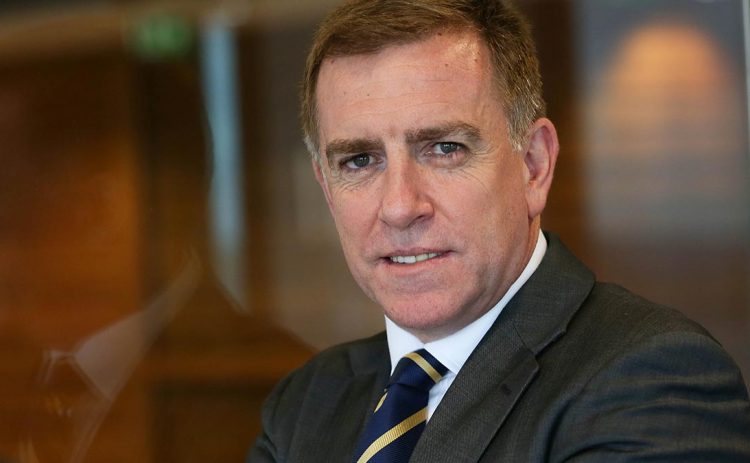

Elise McKay: The headlines driving Aussie equities this week
Quick view
Elise McKay: The headlines driving Aussie equities this week
Here are the main factors driving the ASX this week, according to Aussie equities analyst and portfolio manager ELISE MCKAY and reported by head investment specialist CHRIS ADAMS
Read Pendal’s latest weekly equities overview.

Crispin Murray: Where to find ASX opportunities amid ‘theme-driven’ market noise
Quick view
Crispin Murray: Where to find ASX opportunities amid ‘theme-driven’ market noise
Share prices are increasingly moved by popular themes like AI disruption, trade wars, and tariff fears – without regard to company fundamentals or long-term valuations.
As a result, quality Australian companies with sound outlooks and predictable cash flows are being indiscriminately sold off.
That’s creating opportunities for active fund managers, Pendal’s head of equities Crispin Murray told Morningstar’s 2025 investment conference in Sydney last week.
“We believe this is creating more distortions in the market. It means the amplitude of mispricing is greater, and it lasts longer.”
Global market dislocation means the ASX has a range of industrial companies with predictable cash flows and returns that have been sold down and offer opportunities for investors, he says.
“One example is CSL – one of Australia’s largest, most successful companies. Five years ago it was running high – at an over-40 multiple. It’s now down to about 22 times earnings,” he says.
Fears of the impact of tariffs on CSL are misplaced, assuming the company doesn’t do anything to respond – “and I think that’s where the market’s overreacting,” argues Crispin.
“We think the risk on the tariff front is being overstated, and that’s what’s providing you the opportunity.” Pendal owns CSL.
Read more

‘Emerging markets crisis’? That’s a wildly overstated view, say our experts
Quick view
‘Emerging markets crisis’? That’s a wildly overstated view, say our experts
Some analysts have described a pattern of a weaker dollar and rising bond yields in the US as a ‘classic emerging markets crisis’.
“As veterans of actual emerging crises dating back to 1994, we consider that view to be wildly overstated,” writes Pendal’s EM team in their latest analysis.
In spite of volatility and weakness in core US financial markets, the currencies of almost all emerging markets strengthened against the US dollar in March and April. Meanwhile bond yields fell for the majority of major EMs.
“Emerging markets are driven by two major global drivers: international capital flows and international trade.
“A weaker dollar represents capital flowing out of the US and into the rest of the world – and a weaker dollar has consistently been positive for emerging markets over the past 30 years.
“Although evolving tariff policies threaten a downturn in global trade, the message from financial markets is that investor uncertainty about US economic policies is a clear positive for emerging economies and for investors in emerging markets.”
Read more

Amy Xie Patrick: China, the US, and the value of uncertainty
Quick view
Amy Xie Patrick: China, the US, and the value of uncertainty
This month’s divergence in US and China rates policies wasn’t just a curiosity for money managers, observes Pendal’s head of income strategies, Amy Xie Patrick.
“It’s a study in contrasts, a reflection of deeper structural differences, and a reminder that policy effectiveness doesn’t always come wrapped in transparency or even democracy,” says Amy in her latest markets analysis.
On May 7, the US Fed left rates unchanged despite growing political pressure. Meanwhile, the People’s Bank of China delivered another dose of stimulus.
“One central bank faced market criticism over its non-committal guidance,” notes Amy. “The other moved swiftly and silently, without needing to justify its decision.
“Perhaps the most contrarian yet valuable takeaway is that less policy guidance may be a good thing.
“By avoiding the hard task of forecasting far into the future, we free ourselves from unhelpful narratives may that turn out to be false.
“By focusing on getting it right rather than always being right, we’re able to preserve the flexibility to change course when the fundamentals change.”
Read Amy’s full article here
Latest updates from our fund managers


Income and Fixed Interest
Tim Hext: Australia to expect state budget downgrades
June 25, 2025
See all
Emerging Markets
Emerging markets: Look past commodity exports to countries with strong domestic demand
July 26, 2023
See allSubscribe to The Point
Get regular insights on investing, market analysis and portfolio management from the experts at Perpetual Group.
Follow
The Point



These podcasts are for general information purposes only, should not be considered as a comprehensive statement on any matter and should not be relied upon as such. They have been prepared without taking into account any recipient’s personal objectives, financial situation or needs. Because of this, recipients should, before acting on the information, consider its appropriateness having regard to their or their clients’ individual objectives, financial situation and needs. The information is not to be regarded as a securities recommendation.
The information in these podcasts may contain material provided by third parties, is given in good faith and has been derived from sources believed to be accurate as at its issue date. While such material is published with necessary permission, and while all reasonable care has been taken to ensure that the information in this presentation is complete and correct, to the maximum extent permitted by law neither Pendal nor any company in the Pendal group accepts any responsibility or liability for the accuracy or completeness of this information.
Any projections contained in these podcasts are predictive and should not be relied upon when making an investment decision or recommendation. Whilst we have used every effort to ensure that the assumptions on which the projections are based are reasonable, the projections may be based on incorrect assumptions or may not take into account known or unknown risks and uncertainties. The actual results may differ materially from these projections.
Performance figures are calculated in accordance with the Financial Services Council (FSC) standards. Performance data (post-fee) assumes reinvestment of distributions and is calculated using exit prices, net of management costs. Performance data (pre-fee) is calculated by adding back management costs to the post-fee performance. Past performance is not a reliable indicator of future performance.
For more information, please call Customer Relations on 1300 346 821 8.00am to 6:00pm (Sydney time) or visit our website www.pendalgroup.com


Global equities: What investors are missing about south-east Asian banks
Global equities investors might be wary of US and European bank stocks right now.
But this year’s slow-burn banking crisis in the West – which has seen the collapse of three US banks and the demise of Credit Suisse – has so far left Asian banks relatively unscathed, points out Pendal’s Samir Mehta.
Resilience among Southeast Asian banks indicates a growing maturity among regulators and governments in the region that may be missed by investors, says Mehta, who manages Pendal Asian Share Fund.
Experienced investors will recall Southeast Asia’s currencies, markets and banking systems were heavily impacted in the 1997 crisis and GFC.
But the environment for banks has improved in Singapore, Indonesia, Malaysia and even Thailand, says Samir.

Brenton Saunders: ASX mid-caps offer exposure to fast-growing sectors such as battery metals
Quick view
Brenton Saunders: ASX mid-caps offer exposure to fast-growing sectors such as battery metals
Australia finally has a national strategy to “encourage greater use of cleaner, cheaper-to-run electric vehicles”.
The new ALP policy, alongside similar plans around the world, should help boost demand for “battery metals” such as lithium, produced by a range of ASX-listed miners.
What’s the best way to get exposure to quality stocks in this sector?
Pendal PM Brenton Saunders argues in favour of Aussie mid-cap portfolios.
Mid-cap portfolios are typically less concentrated and offer access to fast-growing industries such as cloud computing, medical innovation and battery metals.
Medium-sized companies tend to offer higher earnings growth than large-cap companies, often with less risk than small caps, says Brenton.
Brenton manages Pendal MidCap Fund, which invests in the 100 biggest companies outside the ASX50, with market caps ranging from around $1 billion to $10 billion.
“It’s really the sweet spot of corporate Australia. It’s a very useful addition to any balanced portfolio.”
Brenton and Australian lithium industry pioneer Ken Brinsden explained the opportunities in a recent webinar.

Aussie equities: What we can expect from earnings in the second half
Quick view
Aussie equities: What we can expect from earnings in the second half
Australia’s economic cycle has gone on longer than expected – and it showed in the recently ended ASX earnings season.
Somewhat surprisingly, most parts of the economy are still in reasonably good shape despite a string of interest rate rises.
The strong jobs market is a factor, helping prop up consumer spending.
“But the expectation is that higher interest rates will likely hurt earnings in the rest of the financial year,” says Brenton Saunders, who manages Pendal MidCap Fund.
“Across the market as a whole, revenue beats were pretty widespread even though many companies missed earnings forecasts at the bottom line. Revenue beats were much higher than profit beats.
“We saw profit margins reduce and that relates to higher costs. In many cases, despite high product price increases, costs increased at a faster rate, resulting in margin pressure.”

Why passive investing isn’t as passive as you may think
Quick view
Why passive investing isn’t as passive as you may think
Passive investing has become popular due to low costs and high diversification.
But it often means owning poor performers that an active manager can avoid, argues Pendal’s Samir Mehta.
Many investors fail to appreciate the process of selecting securities for an index is an active investment process that carries a level of risk, says Samir, who manages Pendal Asian Share Fund.
“Investors should think about this presumption that passive investment is really passive.
“There’s a group of people deciding which stock goes into which index, in what proportion — and there is a timing element as well.
Samir points to Tesla which was added to the S&P 500 in 2020 after a ten-fold share price rise. Index fund investors who passively bought the shares then are now down on their investments.
“Active managers contribute not only by identifying good businesses, but also by taking a view on what not to own,” says Samir.

Brenton Saunders: what to watch in ASX earnings season
Quick view
Brenton Saunders: what to watch in ASX earnings season
Company outlook statements will heavily influence share performance in the ASX half-year earnings season, says Pendal’s Brenton Saunders.
Australian listed companies will report results for the December half over the next few weeks.
Reporting season comes against a backdrop of uncertain global macro-economic data which has the markets on edge as investors try to assess the outlook for inflation and interest rates.
“Most of the focus is going to be on the outlook statements rather than the results companies produce on the day, says Brenton, who manages Pendal MidCaps Fund.
Companies with strong retrospective earnings results and weak outlook statements could be sold off by a market “trying understand what 2023-24 will look like”, says Brenton.
“In general, we expect a complicated reporting season and no real trends.”

Samir Mehta: Protectionist Indonesia is looking attractive in 2023
Quick view
Samir Mehta: Protectionist Indonesia is looking attractive in 2023
Investors should take a new look at Indonesia, where export restrictions are driving new domestic industries, says Pendal’s Samir Mehta.
The protectionist policies of President Joko Widodo are driving transformation in a country once dubbed the ‘sick man of Asia’, says Samir, who manages Pendal Asian Share Fund.
A ban on nickel exports has encouraged a domestic stainless steel industry that’s now among the world’s biggest exporters.
A ban on exporting the bauxite used to make aluminium will come into force this year. Capturing the supply chain for electric vehicle batteries is also on the Indonesian agenda.
Indonesia’s trade balance could be in a sustained surplus while foreign direct investment rises, says Samir.
Lower interest rates, reduced currency volatility and higher growth could compound benefits for investors.

How long will the ASX keep going? Here are the factors to watch
Quick view
How long will the ASX keep going? Here are the factors to watch
It’s been a strong start to the year for the ASX. What will determine how long it keeps going?
Three things are driving a rapid turnaround from last year, says Brenton Saunders, who leads Pendal MidCap Fund:
- The faster-than-expected re-opening of China
- Signs that inflation is reaching a peak
- Increasing evidence that a hard-landing global recession can be avoided
But there are still clouds over the global economy including the prospect of a downturn later this year and the uncertainty of the Russia-Ukraine conflict.
“This year is probably going to be quite choppy, because we have improving longer-term expectations but still with the prospect of some potentially severe short-term implications.
“We still think there’s a fairly high level of binary risk out there that is yet to be quantified.
“Earnings is still the area that we’re most worried about — ratings are starting to improve but there’s still material risk around earnings.”

Brenton Saunders: What you should really be watching as markets rally
Quick view
Brenton Saunders: What you should really be watching as markets rally
The market’s up since the start of October. How should investors interpret this?
Rallies are a sign the market is looking for a slowdown in rate rises. But investors are better off relying on hard economic data than trying to pick a pivot point, says Pendal’s Brenton Saunders.
With labour markets still strong and inflation rising, it is likely too early to suggest central banks are changing their approach, says Brenton, who manages Pendal MidCap Fund.
“Many of the drivers of inflation continue to run hot — and more importantly headline and core inflation remain stronger than expected.
“The Fed has been incredibly clear in terms of their objectives of getting inflation under control.
“We have no reason to doubt them. It just feels like the market is trying to trough a little early.”
Keep an eye on jobs data and earnings downgrades, especially retail, housing and even resources, says Brenton.
Loading posts...

Subscribe to The Point
Get regular insights on investing, market analysis and portfolio management from the experts at Perpetual Group.