Close
Leave Feedback
Welcome to the new btim.com.auTake a two minute tour to see what we've changed
Hi there! Welcome to the new look Pendal website... Take a two minute tour to see what we’ve changed.
Mainstream Online Web Portal
LoginInvestors can view their accounts online via a secure web portal. After registering, you can access your account balances, periodical statements, tax statements, transaction histories and distribution statements / details.
Advisers will also have access to view their clients’ accounts online via the secure web portal.

The Point
Quick, actionable insights for investors


May 29
The headlines driving Aussie equities | Falling USD should lift EMs | Where to find opportunities in theme-driven markets
Loading posts...
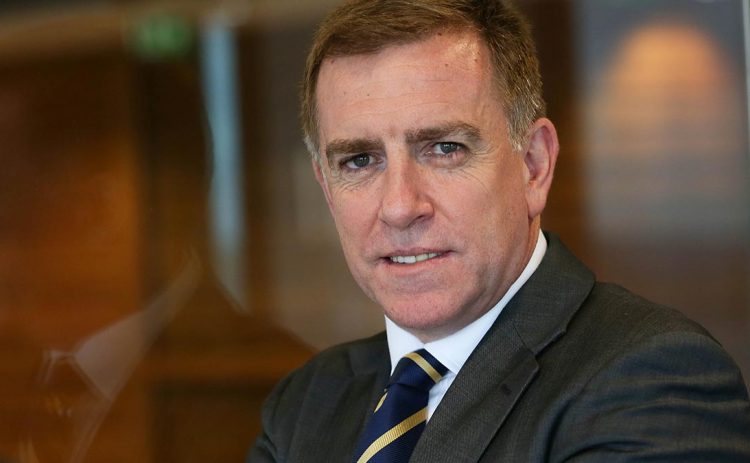


Elise McKay: The headlines driving Aussie equities this week
Quick view
Elise McKay: The headlines driving Aussie equities this week
Here are the main factors driving the ASX this week, according to Aussie equities analyst and portfolio manager ELISE MCKAY and reported by head investment specialist CHRIS ADAMS
Read Pendal’s latest weekly equities overview.

Crispin Murray: Where to find ASX opportunities amid ‘theme-driven’ market noise
Quick view
Crispin Murray: Where to find ASX opportunities amid ‘theme-driven’ market noise
Share prices are increasingly moved by popular themes like AI disruption, trade wars, and tariff fears – without regard to company fundamentals or long-term valuations.
As a result, quality Australian companies with sound outlooks and predictable cash flows are being indiscriminately sold off.
That’s creating opportunities for active fund managers, Pendal’s head of equities Crispin Murray told Morningstar’s 2025 investment conference in Sydney last week.
“We believe this is creating more distortions in the market. It means the amplitude of mispricing is greater, and it lasts longer.”
Global market dislocation means the ASX has a range of industrial companies with predictable cash flows and returns that have been sold down and offer opportunities for investors, he says.
“One example is CSL – one of Australia’s largest, most successful companies. Five years ago it was running high – at an over-40 multiple. It’s now down to about 22 times earnings,” he says.
Fears of the impact of tariffs on CSL are misplaced, assuming the company doesn’t do anything to respond – “and I think that’s where the market’s overreacting,” argues Crispin.
“We think the risk on the tariff front is being overstated, and that’s what’s providing you the opportunity.” Pendal owns CSL.
Read more

‘Emerging markets crisis’? That’s a wildly overstated view, say our experts
Quick view
‘Emerging markets crisis’? That’s a wildly overstated view, say our experts
Some analysts have described a pattern of a weaker dollar and rising bond yields in the US as a ‘classic emerging markets crisis’.
“As veterans of actual emerging crises dating back to 1994, we consider that view to be wildly overstated,” writes Pendal’s EM team in their latest analysis.
In spite of volatility and weakness in core US financial markets, the currencies of almost all emerging markets strengthened against the US dollar in March and April. Meanwhile bond yields fell for the majority of major EMs.
“Emerging markets are driven by two major global drivers: international capital flows and international trade.
“A weaker dollar represents capital flowing out of the US and into the rest of the world – and a weaker dollar has consistently been positive for emerging markets over the past 30 years.
“Although evolving tariff policies threaten a downturn in global trade, the message from financial markets is that investor uncertainty about US economic policies is a clear positive for emerging economies and for investors in emerging markets.”
Read more

Amy Xie Patrick: China, the US, and the value of uncertainty
Quick view
Amy Xie Patrick: China, the US, and the value of uncertainty
This month’s divergence in US and China rates policies wasn’t just a curiosity for money managers, observes Pendal’s head of income strategies, Amy Xie Patrick.
“It’s a study in contrasts, a reflection of deeper structural differences, and a reminder that policy effectiveness doesn’t always come wrapped in transparency or even democracy,” says Amy in her latest markets analysis.
On May 7, the US Fed left rates unchanged despite growing political pressure. Meanwhile, the People’s Bank of China delivered another dose of stimulus.
“One central bank faced market criticism over its non-committal guidance,” notes Amy. “The other moved swiftly and silently, without needing to justify its decision.
“Perhaps the most contrarian yet valuable takeaway is that less policy guidance may be a good thing.
“By avoiding the hard task of forecasting far into the future, we free ourselves from unhelpful narratives may that turn out to be false.
“By focusing on getting it right rather than always being right, we’re able to preserve the flexibility to change course when the fundamentals change.”
Read Amy’s full article here
Latest updates from our fund managers


Income and Fixed Interest
Tim Hext: Australia to expect state budget downgrades
June 25, 2025
See all
Emerging Markets
Emerging markets: Look past commodity exports to countries with strong domestic demand
July 26, 2023
See allSubscribe to The Point
Get regular insights on investing, market analysis and portfolio management from the experts at Perpetual Group.
Follow
The Point



These podcasts are for general information purposes only, should not be considered as a comprehensive statement on any matter and should not be relied upon as such. They have been prepared without taking into account any recipient’s personal objectives, financial situation or needs. Because of this, recipients should, before acting on the information, consider its appropriateness having regard to their or their clients’ individual objectives, financial situation and needs. The information is not to be regarded as a securities recommendation.
The information in these podcasts may contain material provided by third parties, is given in good faith and has been derived from sources believed to be accurate as at its issue date. While such material is published with necessary permission, and while all reasonable care has been taken to ensure that the information in this presentation is complete and correct, to the maximum extent permitted by law neither Pendal nor any company in the Pendal group accepts any responsibility or liability for the accuracy or completeness of this information.
Any projections contained in these podcasts are predictive and should not be relied upon when making an investment decision or recommendation. Whilst we have used every effort to ensure that the assumptions on which the projections are based are reasonable, the projections may be based on incorrect assumptions or may not take into account known or unknown risks and uncertainties. The actual results may differ materially from these projections.
Performance figures are calculated in accordance with the Financial Services Council (FSC) standards. Performance data (post-fee) assumes reinvestment of distributions and is calculated using exit prices, net of management costs. Performance data (pre-fee) is calculated by adding back management costs to the post-fee performance. Past performance is not a reliable indicator of future performance.
For more information, please call Customer Relations on 1300 346 821 8.00am to 6:00pm (Sydney time) or visit our website www.pendalgroup.com


Power-hungry AI a watch-out for equities investors
Big US tech stocks are soaring on a wave of new, advanced AI applications.
But similar to Bitcoin’s early days, excited AI investors may be overlooking the technology’s extremely high power costs and potential associated sustainability issues, says Pendal equities analyst Elise McKay.
That puts a question mark over the industry’s prospects – and the long-term investment case, says Elise.
“Estimates are that every time you query ChatGPT, it is 300 times more expensive than a Google search.”
A Stanford study found that training OpenAI’s popular GPT-3 generative AI system contributed almost 10 times the lifetime emissions of an average car.
The newer GPT-4 model was an estimated eight times more power intensive again, she says.

Sustainable investing: Five steps to avoid greenwashing
Quick view
Sustainable investing: Five steps to avoid greenwashing
As ESG demand grows, investors are becoming more attuned to the threat of greenwashing – misrepresentation of a product’s ethical credentials.
Here are some tips from Pendal risk and compliance manager Diana Zhou and investment analyst Elise McKay:
- Dig deeper than the marketing material: Review the offer documents. A PDS should disclose the extent to which ESG practices are taken into account.
- Check up on a product issuer’s governance: Review the website for statements on responsible investing, climate change, human rights, modern slavery, stewardship as well as proxy voting.
- Understand how sustainability is integrated into the investment framework: Some managers may simply screen out investments while others conduct detailed benchmarking of a company’s ESG targets.
- Look for evidence of stewardship activity: A fund manager that genuinely cares about making a difference will be actively engaged with portfolio companies.
- Spend time with the investment team: “Go and talk to the fund manager — find out if they are really doing what they say they are doing,” says McKay.

Aussie equities: Small business changes bring opportunity for Xero
Quick view
Aussie equities: Small business changes bring opportunity for Xero
Small businesses are under pressure to shift their accounting systems online as a global regulatory push to e-invoicing and real-time tax gathers speed, says Pendal Aussie equities analyst Elise McKay.
E-invoicing — pushed by the ATO and other regulatory bodies globally — aims to reduce security issues and fraud and speed up payments.
Elise has just returned from digital accounting platform Xero’s annual conference in the UK, where the big topic was the push to digital tax.
From 2024 British businesses and landlords with £10,000 turnover will have to report digitally, impacting some 4.2 million taxpayers.
“Regulatory tailwinds are very supportive for cloud accounting adoption,” says Elise.
“I spoke to one UK accounting firm with more than 3000 clients who are going to have to adopt cloud accounting solutions.”
That’s good news for ASX-listed Xero, which is part of Pendal’s Focus and Horizon Aussie equities portfolios.

How ASX miners are creating opportunities for sustainable investors
Quick view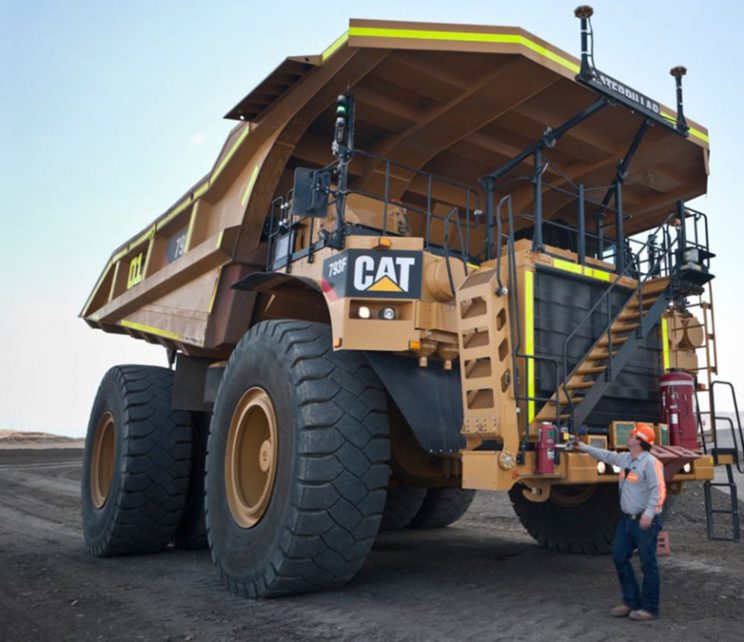
How ASX miners are creating opportunities for sustainable investors
The mining sector probably doesn’t spring to mind as a source of inspiration for sustainable investors.
But companies such as Fortescue, BHP and Rio are investing billions to achieve net zero carbon emissions, creating new opportunities across the mining supply chain, says Pendal Aussie equities analyst Elise McKay.
“We visited 15 different companies across the mining supply chain in Perth last week and one of the key standouts was the extent to which there’s a huge focus on getting to zero emissions,” says Elise.
“It’s a broad generalisation, but companies that tend to be the most forward-thinking in terms of ESG are typically the ones with the biggest problems to solve.”
For example, a number of investable solutions are emerging to reduce haulage emissions — pollution from big mining trucks — at mine sites.
Caterpillar (distributed locally by Westrac, owned by ASX-listed Seven Group), is testing zero-emission mining trucks due for sale by 2027.

Global equities: The hidden opportunity in Europe’s changing market
Quick view
Global equities: The hidden opportunity in Europe’s changing market
Still think of Europe as slow-growth and cyclical, dominated by banks and industrials?
Think again, says Paul Wild, who manages European equities strategies for our UK affiliate J O Hambro.
The new Europe is a fast-growing, cheap play on global themes, Paul says.
A decade of change has seen a new breed of globally significant European companies emerge as leaders in industries as diverse as luxury goods, semi-conductors, healthcare and software.
One main driver of this change is that Europe is highly aligned with global megatrends like decarbonisation and digitalisation, each of which has been the focus of recent stimulus measures.
Europe is now better viewed as a fast-growing, high-quality index with a strong return on equity, Paul argues.
Despite this improvement, European shares are still trading on about 13 times forward earnings, in line with the average multiple of the past 20 years.

Investor confidence is growing in Europe
Quick view
Investor confidence is growing in Europe
Europe is looking attractive again compared to global peers, says J O Hambro PM Paul Wild.
After a challenging year, investment flows into European equity funds are positive again after a milder-than-expected winter and successful efforts to rebuild gas storage, says Paul.
European gas prices have fallen back below where they were before the Ukraine conflict, and plentiful supply means they are likely to stay that way for the next year or so, he says.
“In the second half of this year, many European consumers will be facing lower energy bills again.”
The EU economy is proving surprisingly resilient. Eurozone GDP numbers for Q4 were up 0.1 per cent, allaying fears of a recession.
Wild says the extent of the outflows through last year has left most investors very underweight European equities.
“Since 2016, European equity funds have lost about a third of their assets. So, it doesn’t need a sea change of flows to be significant.”

Global equities: Is Euro pessimism overdone?
Quick view
Global equities: Is Euro pessimism overdone?
Despite the headlines, investor pessimism about a continental recession seems overdone and European shares are starting to look good value, argues Pendal’s Paul Wild.
The eurozone is likely to skirt recession over the winter, says Paul.
“Fiscal policy in Europe, particularly in Germany, is having a significant turn. Germany has come out with three aid packages since the Ukraine invasion which in total equate to about 2.7 per cent of GDP.
“Unemployment in Europe is still at all-time low levels and we’re seeing reasonable consumer resilience.”
And the EU has been aggressively building gas reserves to head off shortages over winter.
“It feels like European governments have taken away the armageddon scenario,” says Paul.
The environment is ripe for a shift in investor approach back to GARP — buying “growth at a reasonable price” — which suits Europe’s weighting towards industries like pharmaceuticals, automotive, insurance and banks, he says.

Global equities: Should investors be worried about Germany?
Quick view
Global equities: Should investors be worried about Germany?
For a country dubbed the economic engine of Europe, Germany is in the news for all the wrong reasons — hit by rising energy prices, threats to gas pipelines, slowing production and a trade deficit after decades of surplus.
But the underlying economic picture for Europe’s biggest economy still looks robust, says Pendal European equities manager Paul Wild.
Look beyond disruptions caused by Russia’s invasion of Ukraine and instead focus on longer-term fundamentals, Paul says.
“Put it in context. Germany has a fairly unparalleled track record of growth.
“The US has run a trade deficit for a very long time and done very, very well — so I don’t think a short-term deficit is going to be the death of Germany.”
A strong industrial focus, open economy and expertise in autos, chemicals and machinery means Germany is fundamentally a play on global GDP growth.
“Remember if you buy shares in Siemens, it might be quoted in Germany but it gets most of its revenue and profits from overseas.”
Loading posts...

Subscribe to The Point
Get regular insights on investing, market analysis and portfolio management from the experts at Perpetual Group.