Mainstream Online Web Portal
LoginInvestors can view their accounts online via a secure web portal. After registering, you can access your account balances, periodical statements, tax statements, transaction histories and distribution statements / details.
Advisers will also have access to view their clients’ accounts online via the secure web portal.

The Point
Quick, actionable insights for investors


May 29
The headlines driving Aussie equities | Falling USD should lift EMs | Where to find opportunities in theme-driven markets
Loading posts...



Elise McKay: The headlines driving Aussie equities this week
Quick view
Elise McKay: The headlines driving Aussie equities this week
Here are the main factors driving the ASX this week, according to Aussie equities analyst and portfolio manager ELISE MCKAY and reported by head investment specialist CHRIS ADAMS
Read Pendal’s latest weekly equities overview.

Crispin Murray: Where to find ASX opportunities amid ‘theme-driven’ market noise
Quick view
Crispin Murray: Where to find ASX opportunities amid ‘theme-driven’ market noise
Share prices are increasingly moved by popular themes like AI disruption, trade wars, and tariff fears – without regard to company fundamentals or long-term valuations.
As a result, quality Australian companies with sound outlooks and predictable cash flows are being indiscriminately sold off.
That’s creating opportunities for active fund managers, Pendal’s head of equities Crispin Murray told Morningstar’s 2025 investment conference in Sydney last week.
“We believe this is creating more distortions in the market. It means the amplitude of mispricing is greater, and it lasts longer.”
Global market dislocation means the ASX has a range of industrial companies with predictable cash flows and returns that have been sold down and offer opportunities for investors, he says.
“One example is CSL – one of Australia’s largest, most successful companies. Five years ago it was running high – at an over-40 multiple. It’s now down to about 22 times earnings,” he says.
Fears of the impact of tariffs on CSL are misplaced, assuming the company doesn’t do anything to respond – “and I think that’s where the market’s overreacting,” argues Crispin.
“We think the risk on the tariff front is being overstated, and that’s what’s providing you the opportunity.” Pendal owns CSL.
Read more

‘Emerging markets crisis’? That’s a wildly overstated view, say our experts
Quick view
‘Emerging markets crisis’? That’s a wildly overstated view, say our experts
Some analysts have described a pattern of a weaker dollar and rising bond yields in the US as a ‘classic emerging markets crisis’.
“As veterans of actual emerging crises dating back to 1994, we consider that view to be wildly overstated,” writes Pendal’s EM team in their latest analysis.
In spite of volatility and weakness in core US financial markets, the currencies of almost all emerging markets strengthened against the US dollar in March and April. Meanwhile bond yields fell for the majority of major EMs.
“Emerging markets are driven by two major global drivers: international capital flows and international trade.
“A weaker dollar represents capital flowing out of the US and into the rest of the world – and a weaker dollar has consistently been positive for emerging markets over the past 30 years.
“Although evolving tariff policies threaten a downturn in global trade, the message from financial markets is that investor uncertainty about US economic policies is a clear positive for emerging economies and for investors in emerging markets.”
Read more

Amy Xie Patrick: China, the US, and the value of uncertainty
Quick view
Amy Xie Patrick: China, the US, and the value of uncertainty
This month’s divergence in US and China rates policies wasn’t just a curiosity for money managers, observes Pendal’s head of income strategies, Amy Xie Patrick.
“It’s a study in contrasts, a reflection of deeper structural differences, and a reminder that policy effectiveness doesn’t always come wrapped in transparency or even democracy,” says Amy in her latest markets analysis.
On May 7, the US Fed left rates unchanged despite growing political pressure. Meanwhile, the People’s Bank of China delivered another dose of stimulus.
“One central bank faced market criticism over its non-committal guidance,” notes Amy. “The other moved swiftly and silently, without needing to justify its decision.
“Perhaps the most contrarian yet valuable takeaway is that less policy guidance may be a good thing.
“By avoiding the hard task of forecasting far into the future, we free ourselves from unhelpful narratives may that turn out to be false.
“By focusing on getting it right rather than always being right, we’re able to preserve the flexibility to change course when the fundamentals change.”
Read Amy’s full article here
Latest updates from our fund managers


Income and Fixed Interest
Tim Hext: Australia to expect state budget downgrades
June 25, 2025
See all
Emerging Markets
Emerging markets: Look past commodity exports to countries with strong domestic demand
July 26, 2023
See allSubscribe to The Point
Get regular insights on investing, market analysis and portfolio management from the experts at Perpetual Group.
Follow
The Point



These podcasts are for general information purposes only, should not be considered as a comprehensive statement on any matter and should not be relied upon as such. They have been prepared without taking into account any recipient’s personal objectives, financial situation or needs. Because of this, recipients should, before acting on the information, consider its appropriateness having regard to their or their clients’ individual objectives, financial situation and needs. The information is not to be regarded as a securities recommendation.
The information in these podcasts may contain material provided by third parties, is given in good faith and has been derived from sources believed to be accurate as at its issue date. While such material is published with necessary permission, and while all reasonable care has been taken to ensure that the information in this presentation is complete and correct, to the maximum extent permitted by law neither Pendal nor any company in the Pendal group accepts any responsibility or liability for the accuracy or completeness of this information.
Any projections contained in these podcasts are predictive and should not be relied upon when making an investment decision or recommendation. Whilst we have used every effort to ensure that the assumptions on which the projections are based are reasonable, the projections may be based on incorrect assumptions or may not take into account known or unknown risks and uncertainties. The actual results may differ materially from these projections.
Performance figures are calculated in accordance with the Financial Services Council (FSC) standards. Performance data (post-fee) assumes reinvestment of distributions and is calculated using exit prices, net of management costs. Performance data (pre-fee) is calculated by adding back management costs to the post-fee performance. Past performance is not a reliable indicator of future performance.
For more information, please call Customer Relations on 1300 346 821 8.00am to 6:00pm (Sydney time) or visit our website www.pendalgroup.com


Sustainable fixed interest: How to weigh up WA’s new green bond
Australians invest some $25 billion a year in local green, climate and social impact bonds, according to the Responsible Investment Association’s latest benchmark report.
But only some meet the highest standards of sustainable investors. And it’s not always obvious which ones.
Consider these three examples of recent issuers:
- A national electricity network connecting renewables to the grid
- A telco giant reducing power consumption on its network
- Mining super power Western Australia – the only Australian state that emits more carbon now than it did in 2005
You may be surprised to learn that only the WA bond – announced last week – met with the approval of Pendal’s income and fixed interest team, including ESG credit analyst Murray Ackman.
WA’s green bond “reflects the focus of the government to green up their economy and their energy use,” says Murray.

How to evaluate Australia’s first sovereign green bond
Quick view
How to evaluate Australia’s first sovereign green bond
The federal government last month announced plans for its first ever green bond in 2024.
The bond will offer a return while funding projects – such as hydrogen, batteries and biodiversity – that support a transition to net-zero carbon emissions.
What should investors make of it?
“We’re excited to see the government show interest in green bonds,” says Murray Ackman, credit ESG analyst in our income and fixed interest team.
“But not all green bonds are equal.”
Murray has four main questions that investors should ask when considering the government’s plans:
- Is the bond supporting genuinely new projects?
- Are the projects truly revolutionary?
- Are expectations about reporting clear and transparent?
- Is the green bond connected to a genuine policy commitment to address climate change?

How investors will be affected by changes to a major Australian climate policy
Quick view
How investors will be affected by changes to a major Australian climate policy
The Albanese government’s plan to revamp a Coalition emissions reduction mechanism raise a number of issues for sustainable investors – and the economy.
To help achieve its climate targets, the government plans to revamp a Tony Abbott-era policy known as the “Safeguard Mechanism“.
The policy was designed to reduce carbon emissions by regulating the amount of greenhouse gases that big industrial facilities could emit.
But baselines were too high and the policy generally was not enforced, say critics.
From July, the Albanese government wants to strengthen the mechanism in a number of ways, including a 4.9 per cent annual cut on allowable emissions for the biggest emitters.
The changes could create winners and losers in investment markets, says Pendal credit ESG analyst Murray Ackman.
But the mechanism still has serious challenges.
It uses offsets which can sometimes be questionable, allows new fossil fuel projects and is susceptible to cost-of-living pressures.

How to use ESG to assess state government bonds
Quick view
How to use ESG to assess state government bonds
If you’re investing in state government bonds, you’re probably not too worried about default.
But you might be concerned about a potential credit downgrade – which could result in lower demand for a bond and a drop in its value.
Pendal’s income and fixed interest team has a tool to assess the ESG credentials of state governments – which can highlight credit risks that might lead to ratings downgrades.
The index shows how each state is addressing the UN’s Sustainable Development Goals – a list of the world’s biggest problems.
The ACT, Tasmania and SA lead the index, while WA, Queensland and the NT lag, says Pendal ESG credit analyst Murray Ackman.
“People always talk about default,” says Murray. “But that’s not all we’re looking at.
“There would have to be something catastrophic for a state government not being able to service its debt.
“What does have an impact on your investment is credit downgrades.”
What Sun Cable’s collapse means for renewable investing
Quick view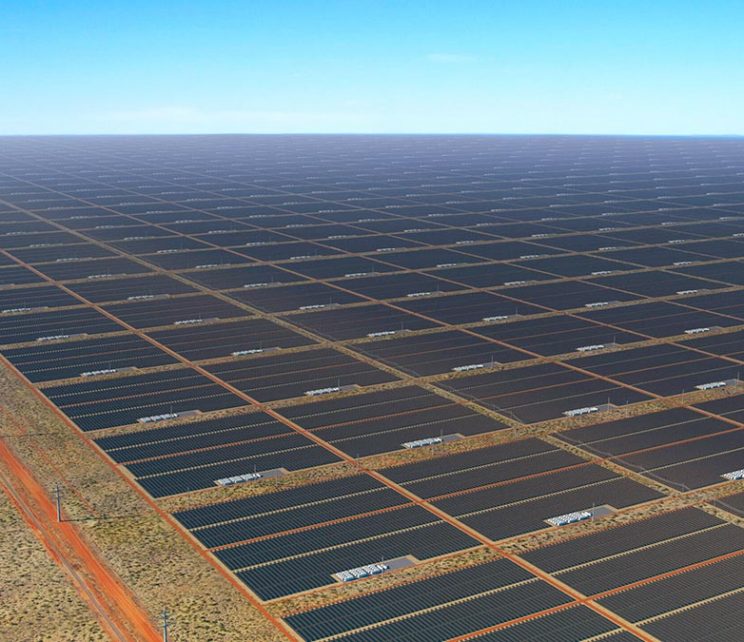
What Sun Cable’s collapse means for renewable investing
What does the collapse of the ambitious Sun Cable solar project say about investing in renewables?
Backed by Atlassian’s Mike Cannon-Brookes and Fortescue’s Andrew Forrest, Sun Cable had grand plans to supply electricity to Singapore from a vast solar array in the Northern Territory.
But the pair disagreed over the method of export – undersea cable versus green hydrogen and ammonia – and the venture is now in voluntary administration.
“The main takeaway is that Sun Cable collapsed over a dispute about exporting – not over the idea of a huge solar array in the NT,” says Pendal ESG credit analyst Murray Ackman.
But it raises questions about a potential Australian energy export industry and the role of green hydrogen.
“Historically, governments and private entrepreneurs are typically best placed to carry the risk of these types of early-stage innovations,” he says.
“For most investors, it’s too early to be going all in on hydrogen.”

Why self storage could be a good place to stash some cash
Quick view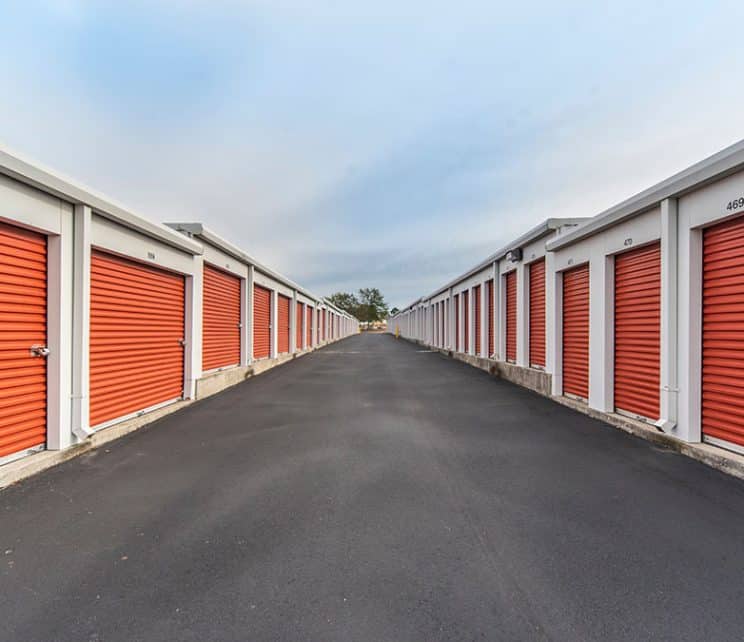
Why self storage could be a good place to stash some cash
“The world of self-storage is not something you often hear about, but it’s an asset class we like,” says Pendal PM Julia Forrest, who co-manages property investing in Pendal’s Aussie equities team.
Record high immigration and a downsizing trend towards apartment-living should fuel ongoing strength in the self-storage industry, says Julia.
“Self-storage space in Australia represents 2.1 square feet per capita. In the US, it’s closer to 6.1 square feet per capita.
“So, in terms of available space, Australia is relatively under-serviced. There is a bit of a runway to catch up.”
Julia points to the example of ASX-listed National Storage REIT – her biggest active position in Pendal’s property strategy.
National Storage (ASX: NSR) is Australia’s biggest self-storage owner-operator with 230 centres across Australia and New Zealand.

Julia Forrest: Retail and industrial lead the way in A-REIT sector
Quick view
Julia Forrest: Retail and industrial lead the way in A-REIT sector
A surprising rebound for shopping malls was the standout feature of this year’s real estate investment trust reporting season, says Pendal’s Julia Forrest.
Rising interest rates and the expiration of interest hedges meant earnings declined for many Australian REITs, surprising investors in a sector where performance is typically well-flagged.
“But the positive surprise was in shopping malls where operating metrics improved,” says Julia who co-manages Pendal’s property trust portfolios.
“Occupancy is pushing towards completely occupied – that’s a long way from where we were two or three years ago.
“There’s genuine demand by tenants for more – and better – space and there’s been no supply for four or five years so you’re seeing competitive tension between tenants.”
A rising population and wages growth has sent retail sales 15 per cent above 2019 levels.

Office property opportunities can still be found as work-from-home tensions play out
Quick view
Office property opportunities can still be found as work-from-home tensions play out
Office space is on the mind of many businesses as WFH tension between workers and bosses plays out.
The market is continuing to evolve, providing plenty of challenges – along with some opportunities, says Julia Forrest, co-manager of Pendal’s property portfolios.
“It’s been very hard to get people back into the office,” Julia says. “And it seems to be more difficult in Melbourne than anywhere else.”
“Physical occupancy in Melbourne is running at about 47 per cent, but recently there’s been some big employers mandating staff to be back in the office 50 per cent of the time,” she says. “That will help.
“Physical occupancy is still low in government because staff have only been mandated to come back to the office one in every five days.”
There are still opportunities in commercial property, though.
Julia points to newly developed 555 Collins Street in Melbourne. It has a good range of tenants including Amazon, will open close to fully tenanted and the construction contract was well negotiated.
Loading posts...

Subscribe to The Point
Get regular insights on investing, market analysis and portfolio management from the experts at Perpetual Group.