Mainstream Online Web Portal
LoginInvestors can view their accounts online via a secure web portal. After registering, you can access your account balances, periodical statements, tax statements, transaction histories and distribution statements / details.
Advisers will also have access to view their clients’ accounts online via the secure web portal.

The Point
Quick, actionable insights for investors


May 29
The headlines driving Aussie equities | Falling USD should lift EMs | Where to find opportunities in theme-driven markets
Loading posts...
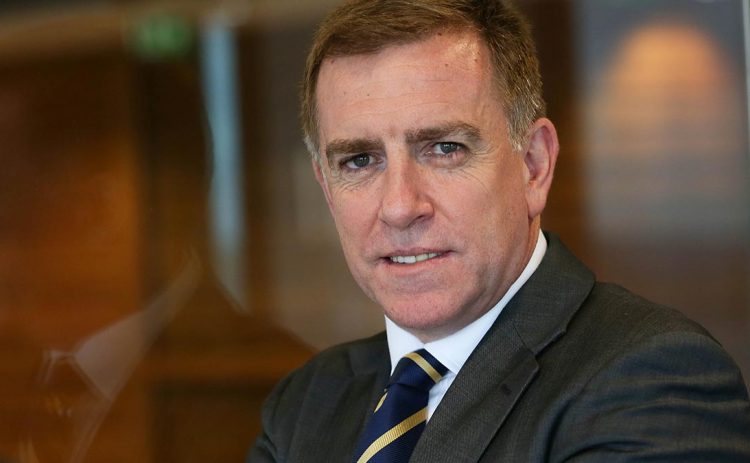
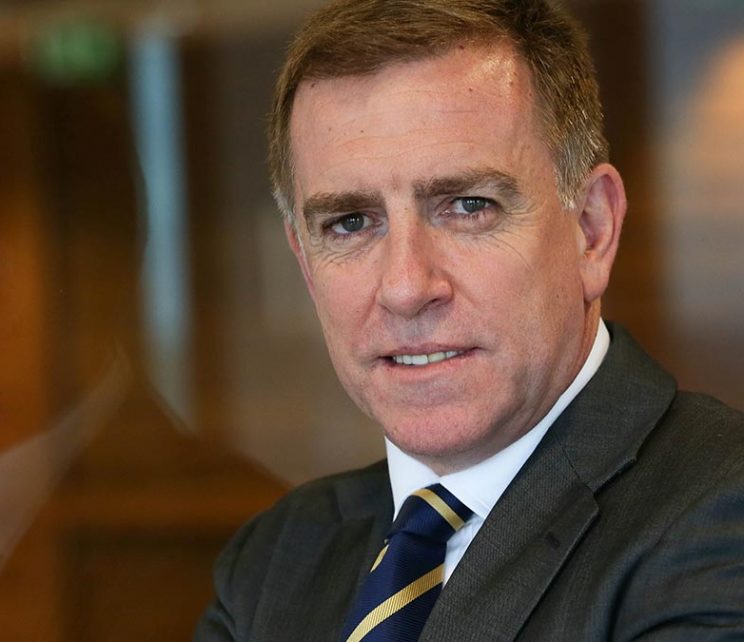

Elise McKay: The headlines driving Aussie equities this week
Quick view
Elise McKay: The headlines driving Aussie equities this week
Here are the main factors driving the ASX this week, according to Aussie equities analyst and portfolio manager ELISE MCKAY and reported by head investment specialist CHRIS ADAMS
Read Pendal’s latest weekly equities overview.
Crispin Murray: Where to find ASX opportunities amid ‘theme-driven’ market noise
Quick view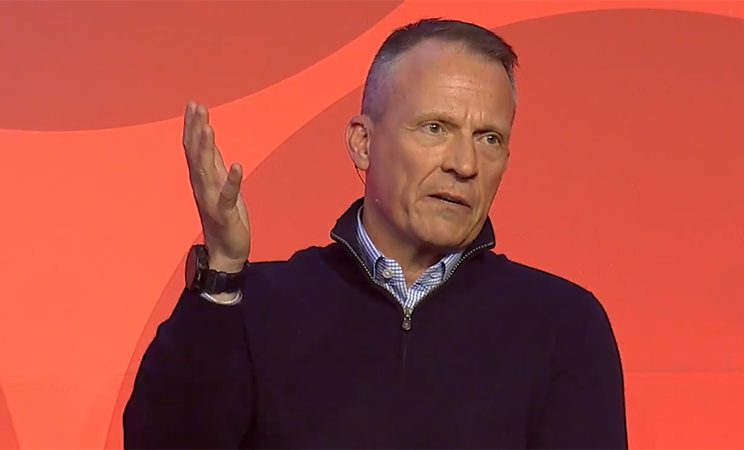
Crispin Murray: Where to find ASX opportunities amid ‘theme-driven’ market noise
Share prices are increasingly moved by popular themes like AI disruption, trade wars, and tariff fears – without regard to company fundamentals or long-term valuations.
As a result, quality Australian companies with sound outlooks and predictable cash flows are being indiscriminately sold off.
That’s creating opportunities for active fund managers, Pendal’s head of equities Crispin Murray told Morningstar’s 2025 investment conference in Sydney last week.
“We believe this is creating more distortions in the market. It means the amplitude of mispricing is greater, and it lasts longer.”
Global market dislocation means the ASX has a range of industrial companies with predictable cash flows and returns that have been sold down and offer opportunities for investors, he says.
“One example is CSL – one of Australia’s largest, most successful companies. Five years ago it was running high – at an over-40 multiple. It’s now down to about 22 times earnings,” he says.
Fears of the impact of tariffs on CSL are misplaced, assuming the company doesn’t do anything to respond – “and I think that’s where the market’s overreacting,” argues Crispin.
“We think the risk on the tariff front is being overstated, and that’s what’s providing you the opportunity.” Pendal owns CSL.
Read more

‘Emerging markets crisis’? That’s a wildly overstated view, say our experts
Quick view
‘Emerging markets crisis’? That’s a wildly overstated view, say our experts
Some analysts have described a pattern of a weaker dollar and rising bond yields in the US as a ‘classic emerging markets crisis’.
“As veterans of actual emerging crises dating back to 1994, we consider that view to be wildly overstated,” writes Pendal’s EM team in their latest analysis.
In spite of volatility and weakness in core US financial markets, the currencies of almost all emerging markets strengthened against the US dollar in March and April. Meanwhile bond yields fell for the majority of major EMs.
“Emerging markets are driven by two major global drivers: international capital flows and international trade.
“A weaker dollar represents capital flowing out of the US and into the rest of the world – and a weaker dollar has consistently been positive for emerging markets over the past 30 years.
“Although evolving tariff policies threaten a downturn in global trade, the message from financial markets is that investor uncertainty about US economic policies is a clear positive for emerging economies and for investors in emerging markets.”
Read more

Amy Xie Patrick: China, the US, and the value of uncertainty
Quick view
Amy Xie Patrick: China, the US, and the value of uncertainty
This month’s divergence in US and China rates policies wasn’t just a curiosity for money managers, observes Pendal’s head of income strategies, Amy Xie Patrick.
“It’s a study in contrasts, a reflection of deeper structural differences, and a reminder that policy effectiveness doesn’t always come wrapped in transparency or even democracy,” says Amy in her latest markets analysis.
On May 7, the US Fed left rates unchanged despite growing political pressure. Meanwhile, the People’s Bank of China delivered another dose of stimulus.
“One central bank faced market criticism over its non-committal guidance,” notes Amy. “The other moved swiftly and silently, without needing to justify its decision.
“Perhaps the most contrarian yet valuable takeaway is that less policy guidance may be a good thing.
“By avoiding the hard task of forecasting far into the future, we free ourselves from unhelpful narratives may that turn out to be false.
“By focusing on getting it right rather than always being right, we’re able to preserve the flexibility to change course when the fundamentals change.”
Read Amy’s full article here
Latest updates from our fund managers


Income and Fixed Interest
Tim Hext: Australia to expect state budget downgrades
June 25, 2025
See all
Emerging Markets
Emerging markets: Look past commodity exports to countries with strong domestic demand
July 26, 2023
See allSubscribe to The Point
Get regular insights on investing, market analysis and portfolio management from the experts at Perpetual Group.
Follow
The Point



These podcasts are for general information purposes only, should not be considered as a comprehensive statement on any matter and should not be relied upon as such. They have been prepared without taking into account any recipient’s personal objectives, financial situation or needs. Because of this, recipients should, before acting on the information, consider its appropriateness having regard to their or their clients’ individual objectives, financial situation and needs. The information is not to be regarded as a securities recommendation.
The information in these podcasts may contain material provided by third parties, is given in good faith and has been derived from sources believed to be accurate as at its issue date. While such material is published with necessary permission, and while all reasonable care has been taken to ensure that the information in this presentation is complete and correct, to the maximum extent permitted by law neither Pendal nor any company in the Pendal group accepts any responsibility or liability for the accuracy or completeness of this information.
Any projections contained in these podcasts are predictive and should not be relied upon when making an investment decision or recommendation. Whilst we have used every effort to ensure that the assumptions on which the projections are based are reasonable, the projections may be based on incorrect assumptions or may not take into account known or unknown risks and uncertainties. The actual results may differ materially from these projections.
Performance figures are calculated in accordance with the Financial Services Council (FSC) standards. Performance data (post-fee) assumes reinvestment of distributions and is calculated using exit prices, net of management costs. Performance data (pre-fee) is calculated by adding back management costs to the post-fee performance. Past performance is not a reliable indicator of future performance.
For more information, please call Customer Relations on 1300 346 821 8.00am to 6:00pm (Sydney time) or visit our website www.pendalgroup.com
Mar 23
Fed signals rates pause | Tips for managing volatility | ASX CEO exodus | Climate policy change


Tim Hext: The end of interest rate hikes may finally be near
Almost exactly a year after the Fed started raising rates, it has finally signalled a pause may be near.
Today’s 25-point hike brings us to a total of 4.75% of hikes in nine meetings.
Future hikes no longer “will” be needed but now “may be appropriate”, the Fed says.
Bond markets rallied modestly on the statement but were given a decent boost by Powell’s comments that the Fed considered a pause this time after recent bank wobbles.
“We are now all on ‘break watch’,” says Pendal’s head of government bond strategies Tim Hext.
“Where will we see the next signs of stress after almost 5% of hikes in a year?”
Tim points to commercial property, private equity and the non-bank financial sector as areas that thrived in the zero-rate environment.
“Equities have largely taken it all in their stride. Stresses may be offset by lower rates, meaning it may be a case of picking the sector winners and losers more than the overall market direction.”
Mar 16
Recession still likely | What’s driving Aussie equities | What to expect in second-half earnings | Lessons from the SVB collapse

Why the Silicon Valley Bank collapse happened and what it means for investors
Quick view
Why the Silicon Valley Bank collapse happened and what it means for investors
Cockroach theory refers to the belief that problems affecting one company may indicate similar problems with other similar companies.
After the collapse of California’s Silicon Valley Bank (SVB), the market and the media are on the lookout for more cockroaches.
The good news is that SVB was an unusual cockroach. There could be other lending institutions with similar red flags, but the bank’s problems were largely self-made.
The SVB episode highlights a number of broader risks, which our head of income strategies Amy Xie Patrick outlines here.
But the failure also reinforces the investment views of our income and fixed interest team
“The SVB collapse highlights the need to hold a true-to-label fixed income allocation in your portfolios – if only for insurance,” Amy says.
“Since the third quarter of 2021, we have held a defensive stance in our credit and income portfolios, favouring quality and liquidity over stretching for that extra bit of yield or spread.”

Crispin Murray: Four issues driving the economic outlook for Aussie equities
Quick view
Crispin Murray: Four issues driving the economic outlook for Aussie equities
Australian stocks have proven remarkably defensive over the past year, compared to global shares and other asset classes, delivering a 6.5 per cent return in the year to February, says Pendal’s Crispin Murray.
A material decline in shares is unlikely in 2023, says Crispin in his new biannual Beyond The Numbers webinar.
Earnings are on track for 2% growth in 2023 and 1% in 2024, he believes.
“However, if we do get the RBA forced to hike rates far higher than the economy can absorb, and we do get a downturn, then we’re going to see much more material downgrades. But it’s not the scenario we expect.”
Four issues will drive the underlying economic picture for Australian companies, he says:
- The risk of a US recession
- The outlook for Chinese growth
- Interest rates and their impact on the Australian economy
- The growing influence of Australian government policy

What’s driving Aussie equities this week
Quick view
What’s driving Aussie equities this week
THE odds of a 50bp US rate hike next week increased markedly after hawkish comments by Fed chair Jay Powell – but that didn’t last long.
Powell last week told US Congress that if the data indicated faster tightening was warranted, “we would be prepared to increase the pace of rate hikes”.
Stronger-than-expected data suggested “the ultimate level of interest rates is likely to be higher than previously anticipated”, he said.
The comments drove two-year US Treasury yields above 5% for the first time since 2007.
The spread between two-year and 10-year bond yields inverted to -107bp – the biggest inversion since 1980 when then Fed chair Paul Volcker was trying to kill inflation.
However, all this was reversed after the collapse of Silicon Valley Bank (SVB) late in the week, which saw yields fall.
Mar 9
Why fiscal policy matters for investors | The ‘no landing’ scenario | Aussie recession unlikely | US set for growth

Tim Hext: Rates are important – but not as much as the Budget
Quick view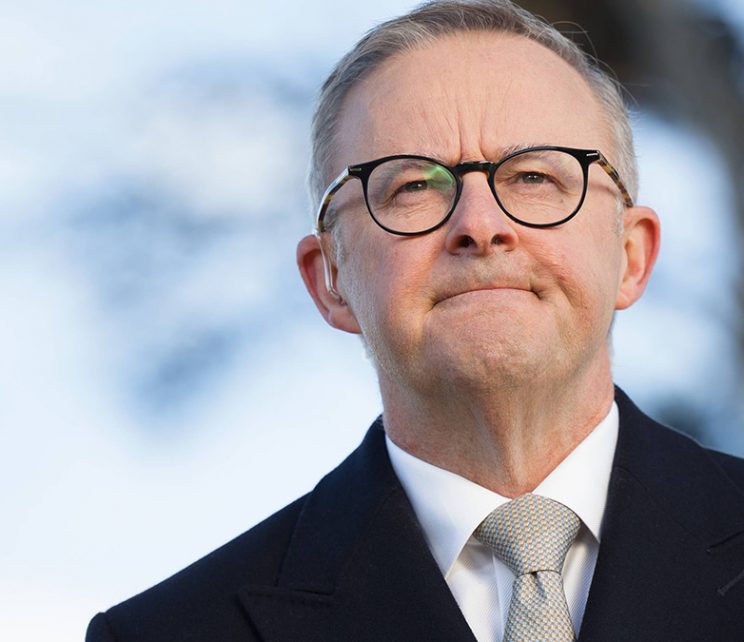
Tim Hext: Rates are important – but not as much as the Budget
While we all focused on the RBA’s 10th rate rise in a row yesterday, Team Albanese was quietly working on a budget that will deliver hundreds of billions of dollars in spending initiatives and cuts in May.
Monetary policy is in the spotlight 11 times a year, while fiscal policy only has two moments – the annual budget and the mid-year outlook.
But investors would be wise to pay more attention to fiscal policy, says our head of government bonds, Tim Hext.
“Fiscal policy is more likely to determine whether or not Australia is going to have a recession,” says Tim.
“We’ve built a whole system around monetary policy and the wisdom of the independent central bank.
“But fiscal policy doesn’t get enough attention.
“The government spent $250 billion during Covid. Fiscal policy remains the main game for people’s pockets and the economy.
“It explains why the Australian economy is proving more resilient to rate hikes, at least for now.”
Loading posts...
Subscribe to The Point
Get regular insights on investing, market analysis and portfolio management from the experts at Perpetual Group.