Mainstream Online Web Portal
LoginInvestors can view their accounts online via a secure web portal. After registering, you can access your account balances, periodical statements, tax statements, transaction histories and distribution statements / details.
Advisers will also have access to view their clients’ accounts online via the secure web portal.

The Point
Quick, actionable insights for investors


May 29
The headlines driving Aussie equities | Falling USD should lift EMs | Where to find opportunities in theme-driven markets
Loading posts...



Elise McKay: The headlines driving Aussie equities this week
Quick view
Elise McKay: The headlines driving Aussie equities this week
Here are the main factors driving the ASX this week, according to Aussie equities analyst and portfolio manager ELISE MCKAY and reported by head investment specialist CHRIS ADAMS
Read Pendal’s latest weekly equities overview.

Crispin Murray: Where to find ASX opportunities amid ‘theme-driven’ market noise
Quick view
Crispin Murray: Where to find ASX opportunities amid ‘theme-driven’ market noise
Share prices are increasingly moved by popular themes like AI disruption, trade wars, and tariff fears – without regard to company fundamentals or long-term valuations.
As a result, quality Australian companies with sound outlooks and predictable cash flows are being indiscriminately sold off.
That’s creating opportunities for active fund managers, Pendal’s head of equities Crispin Murray told Morningstar’s 2025 investment conference in Sydney last week.
“We believe this is creating more distortions in the market. It means the amplitude of mispricing is greater, and it lasts longer.”
Global market dislocation means the ASX has a range of industrial companies with predictable cash flows and returns that have been sold down and offer opportunities for investors, he says.
“One example is CSL – one of Australia’s largest, most successful companies. Five years ago it was running high – at an over-40 multiple. It’s now down to about 22 times earnings,” he says.
Fears of the impact of tariffs on CSL are misplaced, assuming the company doesn’t do anything to respond – “and I think that’s where the market’s overreacting,” argues Crispin.
“We think the risk on the tariff front is being overstated, and that’s what’s providing you the opportunity.” Pendal owns CSL.
Read more

‘Emerging markets crisis’? That’s a wildly overstated view, say our experts
Quick view
‘Emerging markets crisis’? That’s a wildly overstated view, say our experts
Some analysts have described a pattern of a weaker dollar and rising bond yields in the US as a ‘classic emerging markets crisis’.
“As veterans of actual emerging crises dating back to 1994, we consider that view to be wildly overstated,” writes Pendal’s EM team in their latest analysis.
In spite of volatility and weakness in core US financial markets, the currencies of almost all emerging markets strengthened against the US dollar in March and April. Meanwhile bond yields fell for the majority of major EMs.
“Emerging markets are driven by two major global drivers: international capital flows and international trade.
“A weaker dollar represents capital flowing out of the US and into the rest of the world – and a weaker dollar has consistently been positive for emerging markets over the past 30 years.
“Although evolving tariff policies threaten a downturn in global trade, the message from financial markets is that investor uncertainty about US economic policies is a clear positive for emerging economies and for investors in emerging markets.”
Read more

Amy Xie Patrick: China, the US, and the value of uncertainty
Quick view
Amy Xie Patrick: China, the US, and the value of uncertainty
This month’s divergence in US and China rates policies wasn’t just a curiosity for money managers, observes Pendal’s head of income strategies, Amy Xie Patrick.
“It’s a study in contrasts, a reflection of deeper structural differences, and a reminder that policy effectiveness doesn’t always come wrapped in transparency or even democracy,” says Amy in her latest markets analysis.
On May 7, the US Fed left rates unchanged despite growing political pressure. Meanwhile, the People’s Bank of China delivered another dose of stimulus.
“One central bank faced market criticism over its non-committal guidance,” notes Amy. “The other moved swiftly and silently, without needing to justify its decision.
“Perhaps the most contrarian yet valuable takeaway is that less policy guidance may be a good thing.
“By avoiding the hard task of forecasting far into the future, we free ourselves from unhelpful narratives may that turn out to be false.
“By focusing on getting it right rather than always being right, we’re able to preserve the flexibility to change course when the fundamentals change.”
Read Amy’s full article here
Latest updates from our fund managers


Income and Fixed Interest
Tim Hext: Australia to expect state budget downgrades
June 25, 2025
See all
Emerging Markets
Emerging markets: Look past commodity exports to countries with strong domestic demand
July 26, 2023
See allSubscribe to The Point
Get regular insights on investing, market analysis and portfolio management from the experts at Perpetual Group.
Follow
The Point



These podcasts are for general information purposes only, should not be considered as a comprehensive statement on any matter and should not be relied upon as such. They have been prepared without taking into account any recipient’s personal objectives, financial situation or needs. Because of this, recipients should, before acting on the information, consider its appropriateness having regard to their or their clients’ individual objectives, financial situation and needs. The information is not to be regarded as a securities recommendation.
The information in these podcasts may contain material provided by third parties, is given in good faith and has been derived from sources believed to be accurate as at its issue date. While such material is published with necessary permission, and while all reasonable care has been taken to ensure that the information in this presentation is complete and correct, to the maximum extent permitted by law neither Pendal nor any company in the Pendal group accepts any responsibility or liability for the accuracy or completeness of this information.
Any projections contained in these podcasts are predictive and should not be relied upon when making an investment decision or recommendation. Whilst we have used every effort to ensure that the assumptions on which the projections are based are reasonable, the projections may be based on incorrect assumptions or may not take into account known or unknown risks and uncertainties. The actual results may differ materially from these projections.
Performance figures are calculated in accordance with the Financial Services Council (FSC) standards. Performance data (post-fee) assumes reinvestment of distributions and is calculated using exit prices, net of management costs. Performance data (pre-fee) is calculated by adding back management costs to the post-fee performance. Past performance is not a reliable indicator of future performance.
For more information, please call Customer Relations on 1300 346 821 8.00am to 6:00pm (Sydney time) or visit our website www.pendalgroup.com
Jun 15
Take care with US valuations | Time to consider 10-year bonds | What to look for in AI stocks
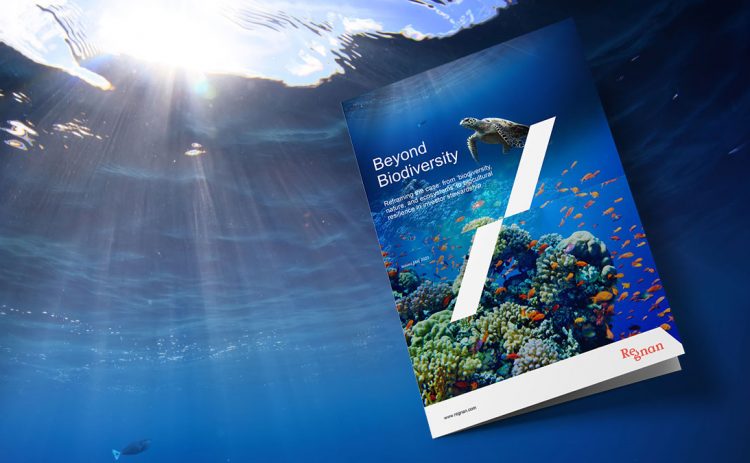
ESG is not enough. Investors must work together to protect the planet, says Regnan
Protecting the integrity of natural systems require policy intervention – and investors should advocate for a more holistic and inclusive regulatory approach.
That’s the view of Regnan’s Oshadee Siyaguna who has developed a new framework which explores why conservation efforts have historically failed to achieve their goals – and what the investment community can do about it.
The framework is outlined in a report called Beyond Biodiversity which can be downloaded here.
“Advocacy has to be top of the list for investors,” says Osh, a thematic Investing analyst with sustainable investing leader Regnan.
“Essentially, that means investors standing up and saying policy has not been adequate.
“It’s very clear that it needs to be policy led because as soon as policy changes, everything else will start to fall in line.”
Jun 8
The case for bonds as rates push towards recession | How China’s weaker economy impacts bond and equity investors | Diversification benefits of impact investing

Jim Taylor: What’s driving ASX stocks this week
Quick view
Jim Taylor: What’s driving ASX stocks this week
Each week our Aussie equities team runs through the factors driving the Aussie stock market.
Observations on two major forces stood out in the latest report from PM Jim Taylor – one in the virtual world and one in the physical world.
On the AI mania gripping US markets, Jim noted that last week was the biggest ever weekly inflow into US listed tech companies at close to $US9 billion, according to researcher EPFR.
“That’s about 40% more than the next biggest inflow in 2021.”
Those more invested in the physical world would have noted the Bureau of Meteorology updating its El Niño-Southern Oscillation outlook from “watch” to “alert”.
“This means about a 70 per cent chance of El Niño forming in 2023 – roughly three times the normal chance,” said Jim.
“After three years of high rainfall, the ‘weather ate my homework’ excuse may be taken off the table for many ASX-listed companies.”

The case for bonds as rate hikes push Australia towards recession
Quick view
The case for bonds as rate hikes push Australia towards recession
Recession talk increased in Australia this week after the RBA’s decision to lift rates for the 12th time in just over a year.
Pendal’s Anna Hong agrees the chance of a recession in Australia is increasing with rate hikes.
That bolsters the case for Australian government bonds, cash and high-grade investment credit, argues Anna, an assistant portfolio manager in Pendal’s Income and Fixed Income team.
Australia is one of only a handful of countries to record a budget surplus this financial year and – not withstanding the threat of recession – remains in good economic shape, she says.
“From an economic perspective, even if things go wrong, the government is in a good position to support the Australian economy.
“Australian banks are world-leading in capital strength. As a result, assets within Australian shores are safer than almost any other part of the world.”

Emerging markets aren’t so different to us – but you’ve got to pick the right ones
Quick view
Emerging markets aren’t so different to us – but you’ve got to pick the right ones
There’s a common misconception that emerging markets countries are dysfunctional, war-torn or burdened with significant health or security issues.
“But they’re not that different from us,” says James Syme, who co-manages Pendal Emerging Markets Opportunities fund.
“The main emerging market benchmark has 24 countries in Latin America, eastern and southern Europe, Africa and Asia.
“Generally they are well-run democracies or stable non-democracies with happy, successful economies and large and growing middle classes.”
That misperception presents an opportunity, says James – as long as investors can choose the right countries.
James and his team are now investing in eight EM countries including Brazil, Mexico and Indonesia.
EMs can help diversify risk in global equities portfolios, says James.

Tim Hext: Inflation remains stubbornly high — but not as high as you may think
Quick view
Tim Hext: Inflation remains stubbornly high — but not as high as you may think
The April monthly inflation data from the ABS showed an annual rise of 6.8%, versus an expected 6.4%.
On the surface that should worry the RBA and markets – and increase the chance of another rate hike in June.
But under the hood, the May number looks closer to 5.5%, which means the RBA should be able to hang on till August and reassess then.
How can we tell? The monthly numbers are published as year-on-year outcomes, and you need to back-solve to gain a sense of the monthly pace, says Pendal’s head of bond strategies Tim Hext.
There’s no underlying inflation data yet, and only half the items in the basket are updated every month at the moment.
Pandemic and energy shock subsidies also need to be taken into account, he says.
“The outlook for inflation here and in the US should be mildly friendly over the next few months,” believes Tim.

What’s driving ASX stocks this week
Quick view
What’s driving ASX stocks this week
Do spikes among US chipmakers such as NVIDIA and Marvell mark the start of a multi-year, AI-driven bull cycle?
What might it mean for ASX stocks?
NVIDIA and its rivals are churning out Graphics Processing Units which are in-demand for AI services such as OpenAI’s ChatGPT.
Pendal equities analyst Elise McKay notes that just seven US tech mega caps (Apple, Microsoft, Alphabet, Amazon, NVIDIA, Meta and Tesla) have driven most of the 25% NASDAQ rally this year.
“But valuation metrics for this group do not seem stretched,” she says. “They are growing, making efficiency gains, have strong balance sheets, are buying back stock and may be moving into a more favourable macro and interest rate backdrop.
“While timing and take-up of accelerated computer infrastructure is uncertain, we expect this to be a net positive for ASX-listed data centre player NEXTDC.
“There could also be a positive impact for Macquarie Technology’s data centre business and Megaport on the network-as-a-service side.”
Loading posts...

Subscribe to The Point
Get regular insights on investing, market analysis and portfolio management from the experts at Perpetual Group.