Investors can view their accounts online via a secure web portal. After registering, you can access your account balances, periodical statements, tax statements, transaction histories and distribution statements / details.
Advisers will also have access to view their clients’ accounts online via the secure web portal.
Quick, actionable insights for investors
Protecting the integrity of natural systems require policy intervention – and investors should advocate for a more holistic and inclusive regulatory approach.
That’s the view of Regnan’s Oshadee Siyaguna who has developed a new framework which explores why conservation efforts have historically failed to achieve their goals – and what the investment community can do about it.
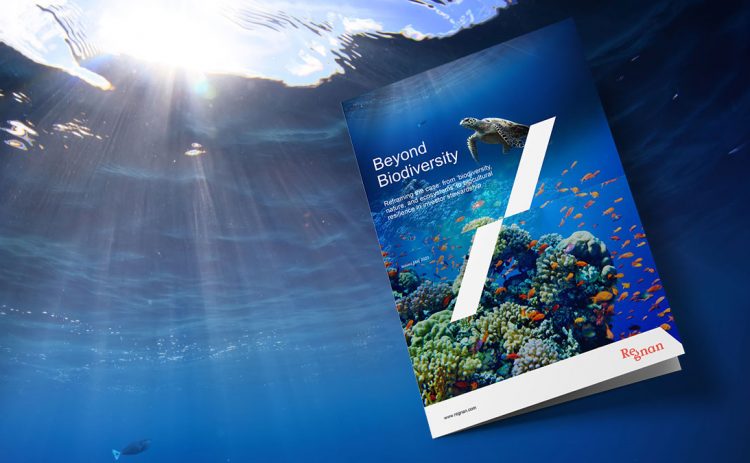
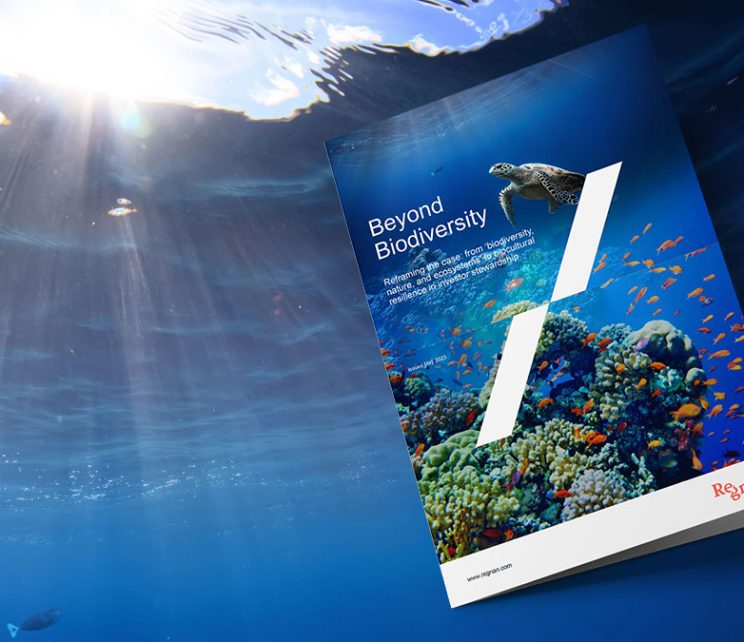
The framework is outlined in a report called Beyond Biodiversity which can be downloaded here.
“Advocacy has to be top of the list for investors,” says Osh, a thematic Investing analyst with sustainable investing leader Regnan.
“Essentially, that means investors standing up and saying policy has not been adequate.
“It’s very clear that it needs to be policy led because as soon as policy changes, everything else will start to fall in line.”
Most investors are now aware of climate change risks.
But biodiversity loss is fast emerging as the next big concern for investors, as financial institutions grapple with how to measure and manage the ecological systems underpinning economic stability.
“Land degradation has reduced the productivity of nearly one-quarter of the global land surface, impacted the wellbeing of about 3.2 billion people and cost about 10% of annual global GDP in lost ecosystem services,” the UN reported in 2019.
Sustainable leader Regnan has just released an investor guide, Beyond Biodiversity, which outlines a set of guiding principles for effective stewardship of biodiversity, nature and ecosystems.
“We want a stable natural system, a stable social system and a stable economic system,” says report author Oshadee Siyaguna.
“The fewer disruptions there are to business operations and socioeconomic conditions, the better and more predictable the investment outcomes.
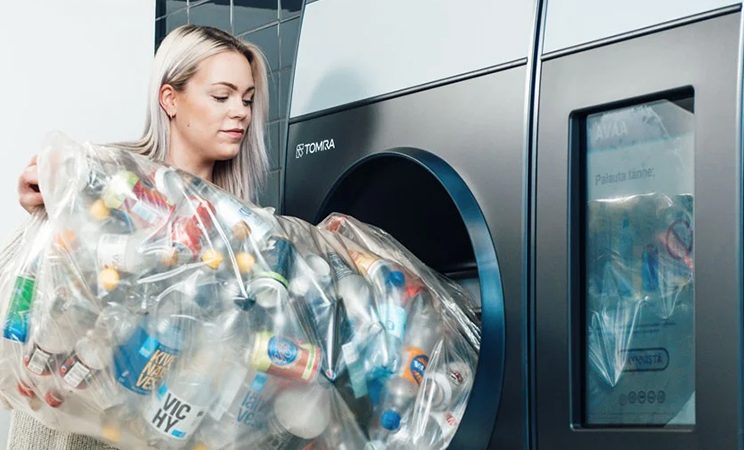
Every year, humans use 1.4 trillion beverage containers – a huge amount of material that potentially could be collected, reused and recycled.
It’s also an opportunity for “impact investors” looking for a way to make money and make the world better, believes Maxine Wille, an analyst with sustainable investing leader Regnan.
Regnan’s Global Equity Impact Solutions fund is an investor in Oslo-listed TOMRA, which makes “reverse vending machines” – those big metal kiosks that swallow your empty bottles and cans in exchange for a deposit refund.
TOMRA’s technology can identify a bottle or can by its shape, material and barcode, sort it into the right recycling queue and provide a payout.
“Now TOMRA has pioneered a machine which collects over 100 bottles in one go,” says Maxine. “You throw them in, and the machine sorts them.”
Last month TOMRA Cleanaway – a joint venture between TOMRA and waste management business Cleanaway and – won a deal to install its machines in parts of Victoria under a new recycling scheme.
As “stewards of capital”, Pendal undertook 562 ESG-related meetings with investee companies and issuers on behalf of investors in 2022.
These “engagements” – where we seek to influence positive outcomes on ESG matters – are one of the benefits of investing with an “active” investment manager.
Deep, fundamental research capabilities in this area are increasingly important, says Pendal’s Richard Brandweiner in our 2022 stewardship report (which you can find here).
“The challenge for investors is identifying authentic leadership that can leverage non-financial factors to generate real economic value,” Richard says.
“Since many of the basic hygiene factors are already considered, it will become particularly difficult for systematic processes like those used by the mainstream ESG score providers to assess this.”
Underperformance in some sustainable strategies may leave investors hesitant about ESG from time to time.
But research from Pendal’s multi-asset team suggests ESG investment risks can be quantified and mitigated – and in the long run, a sustainable approach is likely to outperform.
“Investing sustainably is the right choice in the long term,” argues Michael Blayney, who leads Pendal’s multi-asset team.
“But investors need to understand how much and for how long their performance could differ from unscreened portfolios – and be comfortable with that,” he says.
Pendal quantifies the level of risk inherent to ESG portfolios by comparing the tracking error of representative ESG indexes with unscreened indexes over eight years.
Tracking error is a measure of how closely a managed fund tracks its benchmark index.
The data suggests ESG funds deliver “something like half the risk you would get from an active manager, simply from negative screening”.
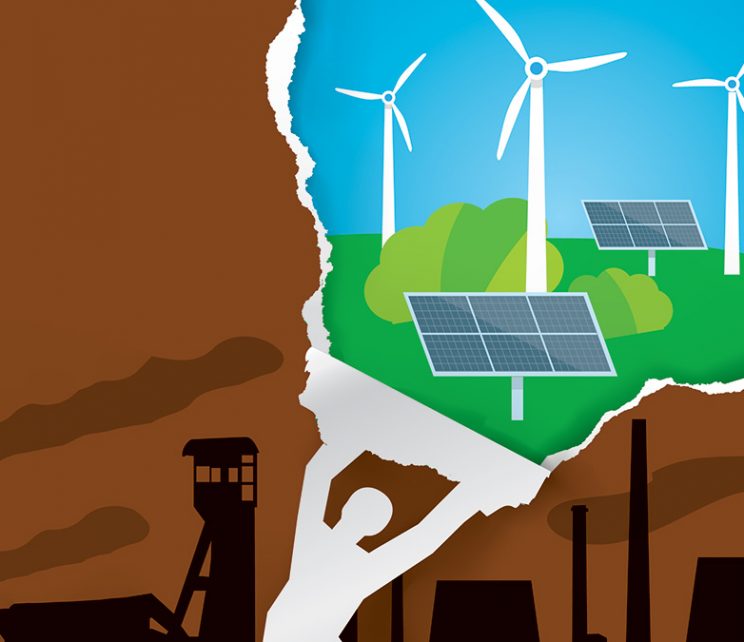
No matter your opinion on climate change, there’s no doubt we’re undergoing an energy transition – a global shift away from fossil-based energy to renewable sources. The evidence is in renewable power growth, electric car adoption, regulatory and policy change, public sentiment – and yes, investment trends.
There are two main reasons an investor might show interest in the energy transition: aligning a portfolio with their values and making money. And it’s not just about identifying innovative companies with strong pricing power and a growing addressable market, Michael says. Sustainable investors must also “participate across multiple asset classes as part of a broader diversified portfolio”.
That might include infrastructure or sustainable bonds for example. “Just like you don’t put all your money into one asset class, investors shouldn’t put their whole portfolio into one thematic or indeed access a large thematic via only one asset class.”
Services – particularly wages and rental inflation – have held up prices recently. But Pendal’s forward indicators show the drivers of these two factors weakening.
That means inflation in developed markets should continue to fall and central banks globally can start cutting rates, says Pendal’s head of credit George Bishay.
It’s a bullish scenario for bonds as well as credit and equity markets, he says.
But one of the risks for that scenario is a Donald Trump victory in November.
“If Trump wins the election, will he have the ability to change policy? Will he have a majority in both houses of Congress?
“If he does, that’s problematic for bonds because ultimately that’s likely to be inflationary,” says George.
The impact of a Trump presidency is more skewed towards longer-term bonds because his policies would likely have a medium-term impact on inflation, George says.
“The short end should continue to perform because central banks will be easing rates as current inflation comes down.”
It’s no surprise that corporate engagement and shareholder action have become one of the most common responsible investment approaches in Australia.
Engagement generally refers to the process of active asset managers “engaging” directly with investee companies and bond issuers to influence corporate behaviour and achieve better outcomes for investors and the community.
More than half of investment managers in our region now have stewardship codes (which generally include an engagement component), according to the Responsible Investment Association of Australasia.
Engagement is a critical component of the investment process for sustainable investor Regnan – and senior analyst Laura Sheehan sees it as an essential tool.
“We need to be able to identify companies that are willing to engage with us,” she says.
Engagement is a two-way relationship, and the key is to have a deep understanding of the business and the industry in which the company operates.
“If you’re asking for things that aren’t realistic, or show you don’t understand the business, that’s going to impact your influence and the willingness of management to engage more broadly.”
Laura explains more here
High fossil fuel prices can understandably discourage investors from allocating to sustainable strategies.
Sustainable portfolios generally exclude exposure to fossil fuels, which may mean underperformance when oil prices rise, for example.
But that’s not necessarily the case across all asset classes, says Pendal’s head of credit and sustainable strategies, George Bishay.
“There’s a perception that all asset classes face these potential performance risks when prioritising sustainability.
“But Australian sustainable fixed-income exhibits minimal sensitivity to oil markets or any other screened activities,” writes George in a new Pendal paper.
Fossil fuel companies typically make up a large part of equities indices (about 15 per cent of the ASX300 in July 2024).
But issuers involved in fossil fuel extraction, exploration or refining are a small component of the Australian fixed-income benchmark.
“This differentiation allows investors to integrate sustainable fixed income into their overall core fixed-interest allocation with minimal additional benchmark risk,” says George.
“By incorporating Australian sustainable fixed income alongside other traditional assets, investors can achieve a robust portfolio while also supporting climate stability or the underserved in society.”
Loading posts...
Loading posts...